Difference between revisions of "Ant, Giant"
From Harath Rules
(Created page with "==Intro== left|200px A giant ant is 100 times the size of a normal ant. Their bodies are about 0.5 meters long, 0.4 meters tall, and 0.1 meters wide th...") |
(→Intro) |
||
| (4 intermediate revisions by the same user not shown) | |||
| Line 1: | Line 1: | ||
==Intro== | ==Intro== | ||
{| class="wikitable" style="width:200px; float:right;" | |||
| https://raw.githubusercontent.com/sschra01/sschra01.github.io/main/GiantAnt.webp?.png | |||
|} | |||
A giant ant is 100 times the size of a normal ant. Their bodies are about 0.5 meters long, 0.4 meters tall, and 0.1 meters wide though it’s legs expand it’s with two 0.6 meters wide. Ants form colonies that range in size from a few dozen predatory individuals living in small natural cavities to highly organised colonies that may occupy large territories and consist of millions of individuals. Larger colonies consist mostly of sterile, wingless females forming castes of “workers”, “soldiers”, or other specialised groups. Nearly all ant colonies also have some fertile males called “drones” and one or more fertile females called “queens”. The colonies are described as superorganisms because the ants appear to operate as a unified entity, collectively working together to support the colony. Ant societies have division of labour, communication between individuals, and an ability to solve complex problems. | A giant ant is 100 times the size of a normal ant. Their bodies are about 0.5 meters long, 0.4 meters tall, and 0.1 meters wide though it’s legs expand it’s with two 0.6 meters wide. Ants form colonies that range in size from a few dozen predatory individuals living in small natural cavities to highly organised colonies that may occupy large territories and consist of millions of individuals. Larger colonies consist mostly of sterile, wingless females forming castes of “workers”, “soldiers”, or other specialised groups. Nearly all ant colonies also have some fertile males called “drones” and one or more fertile females called “queens”. The colonies are described as superorganisms because the ants appear to operate as a unified entity, collectively working together to support the colony. Ant societies have division of labour, communication between individuals, and an ability to solve complex problems. | ||
==Statistics== | ==Statistics== | ||
| Line 12: | Line 14: | ||
| 10 | | 10 | ||
! Hgt | ! Hgt | ||
| | | 4 | ||
! Skill | ! Skill | ||
| 5 | | 5 | ||
| Line 21: | Line 23: | ||
| 1 | | 1 | ||
! Wgt | ! Wgt | ||
| | | 0.5 | ||
! AP | ! AP | ||
| | | 6 | ||
|- | |- | ||
! C | ! C | ||
| Line 30: | Line 32: | ||
| 1 | | 1 | ||
! HP | ! HP | ||
| | | 22 | ||
! Init | ! Init | ||
| | | 10+5 | ||
|- | |- | ||
| colspan="2"| | | colspan="2"| | ||
| Line 40: | Line 42: | ||
| 5 | | 5 | ||
! Damage | ! Damage | ||
| 18 | | 18 | ||
|} | |} | ||
[[Category:Creatures]] | [[Category:Creatures]] | ||

Latest revision as of 20:16, 15 August 2021
Intro
|
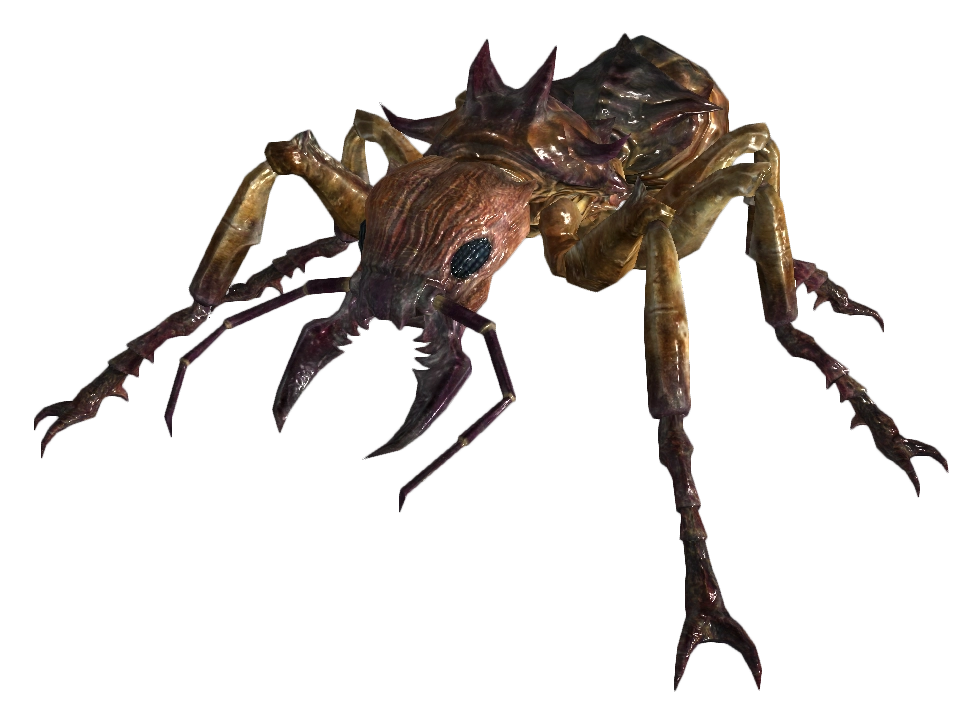
A giant ant is 100 times the size of a normal ant. Their bodies are about 0.5 meters long, 0.4 meters tall, and 0.1 meters wide though it’s legs expand it’s with two 0.6 meters wide. Ants form colonies that range in size from a few dozen predatory individuals living in small natural cavities to highly organised colonies that may occupy large territories and consist of millions of individuals. Larger colonies consist mostly of sterile, wingless females forming castes of “workers”, “soldiers”, or other specialised groups. Nearly all ant colonies also have some fertile males called “drones” and one or more fertile females called “queens”. The colonies are described as superorganisms because the ants appear to operate as a unified entity, collectively working together to support the colony. Ant societies have division of labour, communication between individuals, and an ability to solve complex problems.
Statistics
| S | 50 | W | 10 | Hgt | 4 | Skill | 5 |
|---|---|---|---|---|---|---|---|
| D | 10 | Q | 1 | Wgt | 0.5 | AP | 6 |
| C | 10 | M | 1 | HP | 22 | Init | 10+5 |
| Ready | 2 | R | 5 | Damage | 18 | ||